Is Huge Link Velocity Still Feasible for New Domains?
Scaling Authority in Competitive Markets During 2026
Search algorithms in 2026 have moved past basic keyword matching and fundamental backlink counting. The current environment focuses on the intent and the surrounding context of every incoming connection. For brand names attempting to get exposure in local regions, the obstacle lies in keeping a high volume of acquisition without activating filters developed to catch abnormal development. High-competition sectors need a volume that manual outreach rarely pleases, requiring a shift towards systems that can vet for quality at a scale previously difficult.
The argument in between quality and quantity has typically been framed as a binary option. In the past, online marketers either focused on a handful of high-authority mentions or blasted the web with low-tier directory listings. In 2026, this department has collapsed. Success now depends upon a "quality-at-scale" design. This approach uses advanced information analysis to find thousands of pertinent chances that satisfy strict authority metrics. By focusing on GSA Search Engine Ranker Review, organizations can construct a footprint that looks natural to online search engine while providing the raw power needed to move the needle in difficult niches.
Modern spiders search for patterns of development that match the top entertainers in a specific industry. If a competitor in the surrounding area has 10 thousand links, a new entrant can not expect to rank with just fifty, even if those fifty are from top-tier news sites. The volume must exist, but it must be filtered through a lens of relevance that didn't exist a couple of years back. Automated systems in 2026 are now capable of evaluating the real traffic and user engagement of a potential linking site before an outreach effort is even made.
Data-Driven Choice in Professional SEO
The reasoning behind modern link acquisition is rooted in the concept of topical clusters. A link from a high-authority website that has absolutely nothing to do with the target page carries substantially less weight than it did in previous years. In 2026, the relevance of the connecting page's material is the primary aspect in determining its worth. This is where automation becomes a need instead of a luxury. By hand checking the topical relevance of ten thousand websites is impossible for a human team, however an AI-driven script can do it in minutes.
When carrying out GSA Search Engine Ranker GSA Search Engine Ranker Review, the focus shifts toward determining these clusters. Algorithms now take a look at the outbound link profile of the source site. If a site links to a variety of unassociated topics, it is flagged as a possible link farm, despite its domain authority score. Alternatively, a smaller sized site with a tight concentrate on a particular niche in the metropolitan area can offer a substantial increase. The objective is to construct a profile that includes these extremely appropriate, mid-to-high authority nodes.
Velocity also plays a major function in how online search engine translate link information. An unexpected spike in links utilized to be a red flag. Nevertheless, in 2026, online search engine comprehend that viral moments and marketing presses can trigger genuine spikes. The key is the diversity of the sources. A thousand links from the same IP variety is a problem. A thousand links from different TLDs, geographical places, and hosting service providers is a signal of authentic brand name growth. This diversity is another area where automated systems supply a substantial benefit by pulling from enormous databases of vetted domains.
The Function of Niche Importance in Regional Markets
In extremely competitive niches like legal services or insurance, the expense of a single high-end placement can be astronomical. For businesses in the local market, relying exclusively on these costly wins is hardly ever sustainable. Strategic automation enables for the acquisition of "niche-neighbor" links. These are websites that are not direct rivals but share the same audience. A real estate firm might look for links from regional school boards, moving companies, or home inspectors. These connections produce a web of importance that search engines reward because it shows how real-world organizations connect.
The technology used for this level of mapping has enhanced significantly. By 2026, tools can map the whole "link graph" of a specific market in the territory, recognizing exactly which centers are the most prominent. This enables for a more surgical approach to connect structure. Instead of shooting at every readily available target, the system focuses on the nodes that will have the greatest influence on the total authority of the domain. This is the essence of stabilizing amount with quality: getting enough links to matter, but ensuring every link comes from a source that makes good sense in the eyes of the algorithm.
User habits on the connecting site has also become a ranking element. If a link is put on a page that gets no traffic and has no internal links pointing to it, the search engine will likely ignore it. Modern link-building methods include looking for "live" pages-- material that is really being seen and clicked by real people. This needs a shift in how we consider the worth of a backlink. It is no longer simply a technical vote of confidence; it is a possible source of referral traffic that proves the link's authenticity.
Automated Outreach and Vetting Processes
Among the greatest modifications in 2026 is the disappearance of generic, template-based outreach. Spam filters have actually become too great at blocking anything that looks like a mass e-mail. To be successful at scale, automation must be customized. This involves utilizing data points about the target site-- such as their most popular recent post or a particular space in their material-- to craft a message that seems like it was written by a human researcher. This top-level customization enables the volume needed for competitive specific niches while maintaining a high reaction rate.
The vetting process has also been moved into the automation layer. Before a website is even considered for a project, it should pass a series of "medical examination." These include inspecting for recent drops in organic traffic, which might show a charge, and analyzing the ratio of followed to unfollowed links. In the urban center, where regional competitors is strong, these medical examination prevent a brand from associating with "toxic" domains that could drag down their own rankings. This proactive method makes sure that the "amount" part of the formula does not jeopardize the "quality" side.
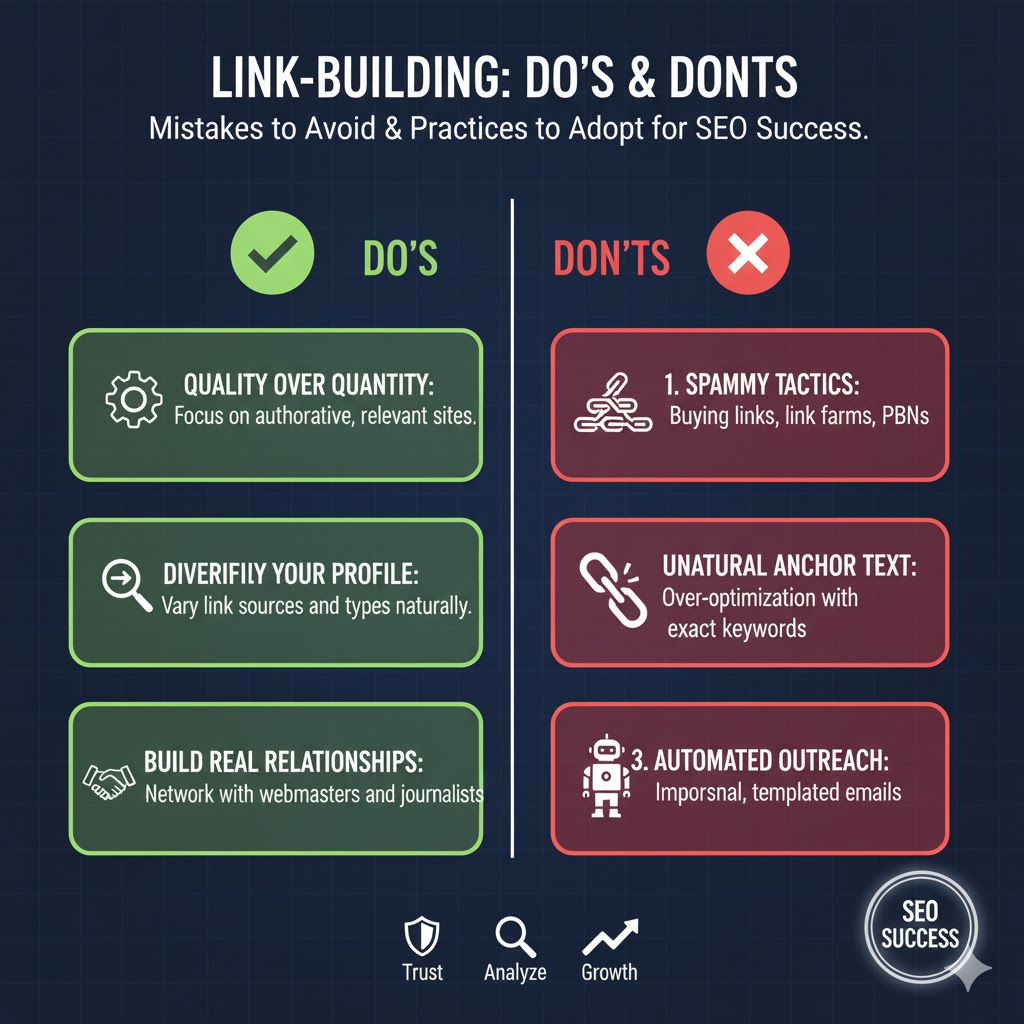
Furthermore, the concept of anchor text circulation has actually developed. Over-optimization of anchor text is among the simplest ways to get flagged. In 2026, the recommendation is a much heavier lean toward branded terms and natural expressions. Automated systems help manage this by keeping a running tally of every anchor used across thousands of links, ensuring that the last profile looks like it was produced by people naturally talking about the brand name, rather than a marketer attempting to hit a particular keyword target.
Tracking Link Durability and Health
Building the links is only half the fight. In 2026, link decay is a substantial problem. Websites go offline, pages are deleted, and "no-follow" tags are included after the reality. Preserving a strong profile in the local area requires continuous monitoring. Automated tools now track the status of every link in real-time. If a high-value link vanishes, the system can automatically set off a replacement campaign or notify a staff member to connect to the site owner. This persistent maintenance guarantees that the total "quantity" of links remains steady in time.
The relationship between links and other signals, such as social mentions and brand name searches, is likewise more carefully connected than ever. Search engines look for a correlation in between link development and an increase in brand name interest. If a site is acquiring countless links but no one is looking for the brand name, it looks suspicious. Successful methods in 2026 often coordinate link acquisition with broader brand awareness efforts in the region. This produces a holistic signal of growth that is much harder for search engines to neglect or punish.
Competitive niches require a level of aggressiveness that can be risky without the right data. By using automation to manage the heavy lifting of vetting, outreach, and tracking, businesses can focus on the higher-level method of content development and brand positioning. The balance of quality and quantity is not a fixed point on a scale; it is a moving target that requires continuous adjustment based on the most current data from the search environment.
Future Directions for Link Acquisition
As we move through 2026, the difference in between "digital PR" and "link building" continues to blur. The most reliable links are those that come from high-authority sources as an outcome of genuine news or high-quality data studies. Nevertheless, these are tough to get at the scale needed for aggressive SEO. The middle ground is where the most advanced marketers are operating. They use automated tools to discover the smaller, niche-specific reporters and bloggers who are trying to find the exact kind of knowledge the brand name supplies. This enables a stable stream of top quality positionings that have the authority of a PR win however the consistency of an automated project.
The expense of entry in numerous niches has risen due to the fact that of the sophistication of these tools. To compete in any major hub today, a brand needs to have a technical setup that can deal with massive quantities of data. This does not mean human oversight is gone. Instead, the role of the SEO expert has altered from a manual contractor to a system architect. They create the rules that the automation follows, guaranteeing that the "quality" criteria are rigorous adequate to protect the site while the "quantity" criteria are high enough to win.
Outcomes in 2026 are determined by more than simply rankings. The focus is on the overall authority of the domain and its capability to rank for a broad set of related terms. A well balanced link profile, developed with a mix of high-end manual wins and high-volume automated positionings, offers the structure for this kind of broad-spectrum success. By dealing with link structure as an information science issue instead of an easy outreach task, business can attain outcomes that were previously out of reach in the most competitive sectors of the internet.
Every link serves as a little piece of a much bigger puzzle. In the local territory, where every service is defending a spot on the very first page, the winners are those who can manage both the fine details of a single placement and the broad scope of a multi-thousand link campaign. The year 2026 has actually shown that those who try to pick in between quality and amount normally wind up with neither, while those who embrace both through technology discover themselves at the top of the search engine result.