Why Chasing Link Volume Frequently Destroys Expert Browse Rankings
Optimizing automated ranking for 2026 Algorithms
Automated link building has gone through significant shifts as online search engine algorithms have actually become more skilled at determining abnormal patterns. In the high-stakes environment of 2026, relying on out-of-date methods for GSA Search Engine Ranker (GSA SER) projects often results in decreasing returns or manual charges. The focus has actually approached advanced anchor text diversity, particularly for those running in competitive niches where every link is scrutinized by machine-learning filters. Effective specialists no longer view GSA SER as a tool for mass-blasting generic comments however as a surgical instrument for constructing a varied structure of secondary and tertiary signals.
The core of a modern-day method includes moving far from the aggressive exact-match anchor ratios that dominated the early 2020s. In 2026, the priority is on developing a link profile that imitates organic growth. This is especially real for professional SEO efforts where the goal is to build authority without triggering over-optimization triggers. Accomplishing success with GSA Search Engine Ranker Verdict needs a deep understanding of how automatic platforms disperse link juice across different domain authorities while keeping a profile that looks spontaneous to an algorithmic audit.
Advanced Anchor Ratios for High-Competition Sectors
Developing the best balance between different kinds of anchor text is the most vital action in setting up a GSA SER project. In the present year, information suggests that "Raw URL" and "Branded" anchors should make up the bulk of the profile, frequently comprising 60 to 70 percent of the overall links. This method offers a security internet, enabling the staying percentage to be utilized for more targeted terms. For projects targeting various urban markets, localization through anchor text must be managed with care to avoid repetitive footprints that signal automation.
- Raw URL Anchors: These consist of variations like https://domain.com, domain.com, and www.domain.com. They are the safest anchors and should be used most regularly in tier 1 and tier 2 campaigns.
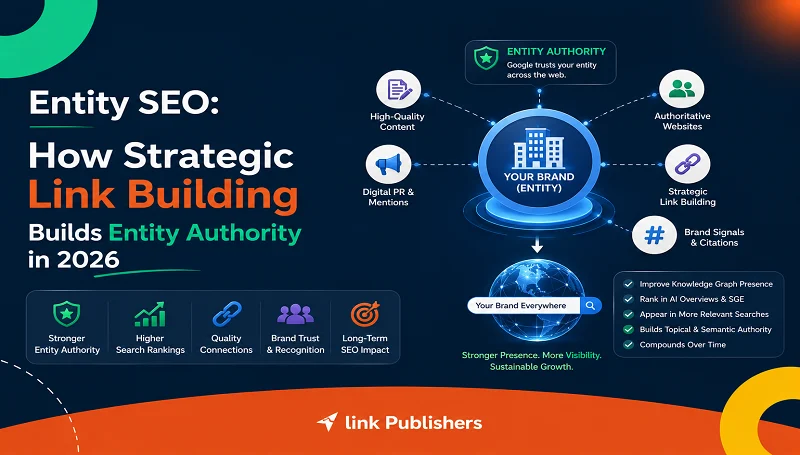
- Branded Anchors: Using the specific trademark name helps build "entity" authority. In 2026, search engines focus on entities over basic keywords, making top quality links necessary for long-term stability.
- Generic Anchors: Expressions such as "click on this link," "website," or "this link" stay required for a natural profile. While they pass little keyword-specific importance, they are crucial for remaining under the radar.
- LSI and Partial Match: Latent Semantic Indexing (LSI) terms supply context without the risks associated with exact-match keywords. These need to be different continuously utilizing big spintax lists.
When targeting specific regions, these ratios may shift somewhat to represent local search intent, but the concept of safety first remains. Making use of exact-match anchors need to be restricted to less than 3 percent of the total link count, and even then, mainly on lower tiers that do not point straight to the cash website.
Implementing Contextual Diversity in GSA SER
The engines picked within GSA SER play a significant role in how anchor text is perceived. In 2026, search engines position greater value on contextual links-- those found within the body of a post or an article-- compared to sidebar or footer links. Configuring the software application to prioritize "Article," "Wiki," and "Social Network" engines enables a more natural combination of anchors. Within these platforms, the surrounding text, or co-occurrence, is just as crucial as the anchor itself.
Modern GSA SER setups typically integrate with AI-driven content generators to make sure that the paragraph surrounding the link pertains to the target niche. This relevance helps justify the existence of the anchor text. For circumstances, adopting GSA Search Engine Ranker Comprehensive Software Verdict offers a layer of topical authority that online search engine use to categorize the connected page. If the surrounding sentences go over industry patterns or particular technical details, the link is considered as a valuable resource instead of a forced insertion.
Proxies and captcha solving also converge with anchor variety. Using high-quality turning property proxies guarantees that the links are originating from varied IP ranges, avoiding the "area" effect where a cluster of links with comparable anchors from the very same IP block is flagged. In 2026, the speed of link acquisition is secondary to the quality and diversity of the source domains.
The Role of Multi-Tiered Techniques
Strategic executions for competitive niches practically always involve a tiered method. Tier 1 links are those pointing straight to the cash site and are usually developed with the highest level of care, typically using handbook or semi-automated approaches. GSA SER stands out at Tier 2 and Tier 3, where the objective is to power up the Tier 1 links. In these lower tiers, anchor text diversity can be more comprehensive, focusing heavily on raw URLs and generic terms to avoid "bleeding" too much keyword-specific pressure up the chain.
For a job concentrated on digital growth, the Tier 2 technique might include countless social bookmarks and wiki entries. The anchor text for these ought to target the titles of the Tier 1 short articles rather than the cash website's primary keywords. This develops a natural-looking web of references. If a Tier 1 article is titled "Modern Solutions for local businesses," the Tier 2 anchors must utilize variations of that title. This indirect method of increasing authority has actually shown to be among the most resilient strategies in 2026.
Filtering and Data Management for Longevity
Success with GSA SER is typically discovered in what the user chooses not to publish on. The filtering options within the software application enable the exclusion of sites with high outgoing link counts or those in unassociated languages. In 2026, the "Bad Words" filter is a necessary tool for maintaining a clean profile. By filtering out websites associated with "pharma" or "gaming," a campaign targeting an expert niche remains within a relevant neighborhood.
The "Worldwide Site List" function is another location where variety is managed. Instead of utilizing the same lists for every single task, advanced users section their lists based on the target niche. A campaign for a service in the surrounding area must use a list of domains that have historically shown greater indexing rates for regional material. This level of granularity prevents the link profile from ending up being a carbon copy of countless other automated campaigns.
Keeping an eye on the indexing rate of these links is equally essential. There is no point in structure diverse anchors if online search engine never see them. Utilizing dedicated indexing services that make use of crawling instead of pinging makes sure that the diverse anchor profile is really represented in the search engine's database. In 2026, the hold-up in between link creation and indexing has increased, needing persistence and a long-lasting view of the campaign's development.
Avoiding Typical Footprints in Automated Projects
One of the simplest methods to get a website flagged is by utilizing a fixed set of anchor texts across thousands of various platforms. Even if the anchors vary, the ratio of that diversity can end up being a footprint if it is similar across every platform. Advanced GSA SER users reduce this by utilizing the "Randomize" features and macros. For example, using the % anchor_text% macro in mix with % url% and different generic macros guarantees that no two posts are precisely alike.
Another footprint to prevent is the "same-time" link blast. Spreading out the link building over a longer duration utilizing the "Pause" and "Scheduled" functions in GSA SER simulates the natural ebb and circulation of natural discusses. A website that suddenly gains 5,000 links in two hours with a completely optimized 10 percent exact-match ratio is a warning. A site that acquires those very same links over 3 months is much more most likely to be seen as an increasing authority in its field.
The data from 2026 shows that the most effective automated projects are those that focus on the user's experience by putting links in understandable, AI-enhanced content. By concentrating on anchor text diversity and cautious engine choice, it is possible to use tools like GSA SER to compete in even the most hard specific niches. The key is to stop considering links as units of power and start thinking of them as signals of relevance and trust within a particular digital environment.
Keeping a tidy and varied backlink profile is not a one-time task however a constant procedure of modification. As the search algorithms in regional hubs continue to progress, the techniques utilized to build authority must also adjust. Those who invest the time into fine-tuning their anchor text circulation and content quality will discover that automation remains a powerful force for ranking in 2026 and beyond.