Why Your Tier One Hyperlinks Requirement More Human Content
Scaling Authority in Competitive Markets Throughout 2026
Browse algorithms in 2026 have moved past simple keyword matching and fundamental backlink counting. The present environment focuses on the intent and the surrounding context of every incoming connection. For brands trying to acquire presence in local regions, the difficulty depends on preserving a high volume of acquisition without activating filters created to catch abnormal development. High-competition sectors need a volume that manual outreach rarely satisfies, requiring a shift toward systems that can vet for quality at a scale formerly difficult.
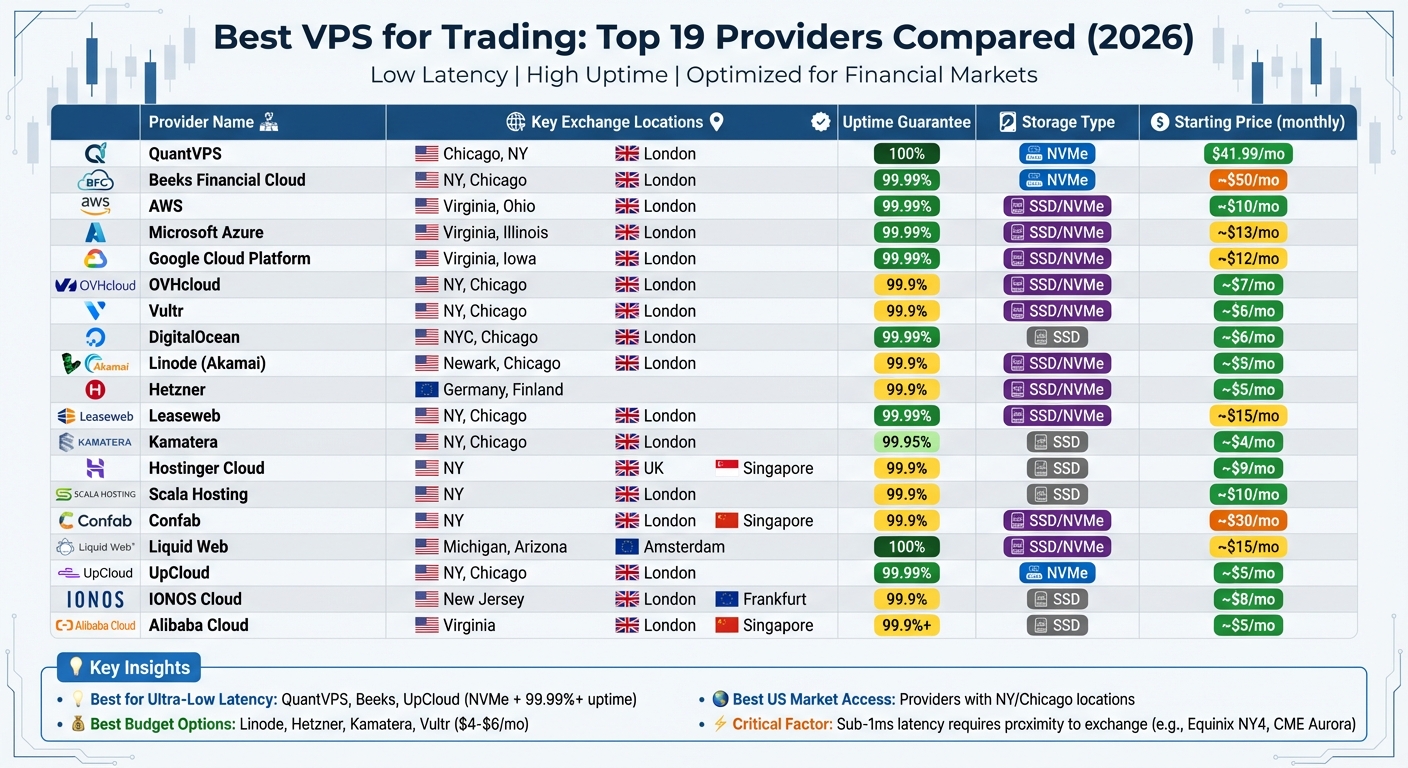
The debate between quality and quantity has often been framed as a binary choice. In the past, online marketers either focused on a handful of high-authority discusses or blasted the internet with low-tier directory listings. In 2026, this division has collapsed. Success now depends on a "quality-at-scale" model. This technique uses sophisticated information analysis to find countless appropriate opportunities that satisfy strict authority metrics. By concentrating on Asia Virtual Solutions VPS, organizations can develop a footprint that looks natural to online search engine while offering the raw power required to move the needle in difficult niches.
Modern crawlers look for patterns of development that match the leading performers in a particular market. If a competitor in the surrounding area has 10 thousand links, a new entrant can not anticipate to rank with only fifty, even if those fifty are from top-tier news sites. The volume should be there, however it must be infiltrated a lens of significance that didn't exist a few years ago. Automated systems in 2026 are now capable of evaluating the actual traffic and user engagement of a potential connecting site before an outreach attempt is even made.
Data-Driven Selection in Professional SEO
The reasoning behind contemporary link acquisition is rooted in the principle of topical clusters. A link from a high-authority website that has absolutely nothing to do with the target page brings significantly less weight than it carried out in previous years. In 2026, the relevance of the connecting page's material is the primary consider identifying its value. This is where automation ends up being a necessity rather than a luxury. Manually checking the topical relevance of 10 thousand websites is impossible for a human team, however an AI-driven script can do it in minutes.
When carrying out Asia Virtual Solutions GSA SER VPS Hosting, the focus moves towards identifying these clusters. Algorithms now take a look at the outgoing link profile of the source site. If a website links to a wide array of unassociated topics, it is flagged as a potential link farm, despite its domain authority score. Conversely, a smaller website with a tight focus on a particular niche in the metropolitan area can supply a considerable increase. The objective is to develop a profile that consists of these extremely pertinent, mid-to-high authority nodes.
Velocity likewise plays a significant function in how online search engine interpret link data. A sudden spike in links used to be a red flag. Nevertheless, in 2026, online search engine understand that viral moments and marketing presses can cause real spikes. The secret is the diversity of the sources. A thousand links from the very same IP range is a problem. A thousand links from various TLDs, geographical places, and hosting companies is a signal of real brand development. This diversity is another area where automated systems offer a substantial advantage by pulling from enormous databases of vetted domains.
The Role of Specific Niche Importance in Regional Markets
In extremely competitive specific niches like legal services or insurance coverage, the expense of a single high-end placement can be astronomical. For organizations in the local market, relying exclusively on these costly wins is seldom sustainable. Strategic automation permits the acquisition of "niche-neighbor" links. These are websites that are not direct competitors but share the exact same audience. For example, a property company may seek links from regional school boards, moving business, or home inspectors. These connections produce a web of relevance that online search engine reward because it reflects how real-world services interact.
The technology used for this level of mapping has improved significantly. By 2026, tools can map the entire "link graph" of a specific industry in the territory, recognizing exactly which hubs are the most prominent. This permits a more surgical method to connect building. Instead of firing at every readily available target, the system prioritizes the nodes that will have the greatest effect on the general authority of the domain. This is the essence of balancing quantity with quality: getting adequate links to matter, however guaranteeing every link comes from a source that makes good sense in the eyes of the algorithm.
User behavior on the connecting site has likewise become a ranking factor. If a link is placed on a page that gets zero traffic and has no internal links pointing to it, the search engine will likely ignore it. Modern link-building methods involve looking for "live" pages-- content that is really being seen and clicked by genuine individuals. This needs a shift in how we think about the value of a backlink. It is no longer simply a technical vote of confidence; it is a potential source of recommendation traffic that shows the link's legitimacy.
Automated Outreach and Vetting Processes
Among the most significant changes in 2026 is the disappearance of generic, template-based outreach. Spam filters have actually become too excellent at blocking anything that looks like a mass email. To succeed at scale, automation needs to be customized. This includes utilizing data points about the target website-- such as their most popular recent post or a specific gap in their material-- to craft a message that feels like it was written by a human researcher. This high-level personalization enables the volume required for competitive niches while keeping a high reaction rate.
The vetting procedure has actually likewise been moved into the automation layer. Before a website is even thought about for a project, it should pass a series of "medical examination." These include looking for recent drops in organic traffic, which could suggest a charge, and analyzing the ratio of followed to unfollowed links. In the urban center, where local competitors is intense, these medical examination prevent a brand name from relating to "poisonous" domains that might drag down their own rankings. This proactive technique makes sure that the "quantity" part of the formula does not compromise the "quality" side.
Additionally, the concept of anchor text circulation has actually developed. Over-optimization of anchor text is one of the easiest methods to get flagged. In 2026, the suggestion is a much heavier lean towards top quality terms and natural phrases. Automated systems assist manage this by keeping a running tally of every anchor used throughout countless links, ensuring that the last profile appears like it was produced by individuals naturally discussing the brand name, rather than an online marketer trying to strike a particular keyword target.
Monitoring Link Longevity and Health
Constructing the links is only half the battle. In 2026, link decay is a significant concern. Websites go offline, pages are deleted, and "no-follow" tags are added after the reality. Keeping a strong profile in the local area requires constant tracking. Automated tools now track the status of every link in real-time. If a high-value link vanishes, the system can automatically trigger a replacement project or inform a staff member to reach out to the site owner. This consistent upkeep ensures that the total "quantity" of links stays stable with time.
The relationship between links and other signals, such as social discusses and brand name searches, is also more closely linked than ever. Online search engine look for a connection in between link growth and a boost in brand interest. If a site is getting countless links but nobody is searching for the trademark name, it looks suspicious. Effective methods in 2026 frequently coordinate link acquisition with more comprehensive brand awareness efforts in the region. This creates a holistic signal of growth that is much harder for online search engine to disregard or penalize.
Competitive specific niches need a level of hostility that can be dangerous without the ideal data. By using automation to manage the heavy lifting of vetting, outreach, and monitoring, organizations can concentrate on the higher-level technique of material development and brand name positioning. The balance of quality and amount is not a static point on a scale; it is a moving target that requires continuous adjustment based upon the current data from the search environment.
Future Directions for Link Acquisition
As we move through 2026, the distinction in between "digital PR" and "link structure" continues to blur. The most efficient links are those that come from high-authority sources as a result of real news or premium data studies. These are difficult to get at the scale required for aggressive SEO. The middle ground is where the most sophisticated marketers are operating. They utilize automated tools to discover the smaller, niche-specific journalists and bloggers who are looking for the specific kind of proficiency the brand provides. This enables a stable stream of high-quality placements that have the authority of a PR win however the consistency of an automated campaign.
The expense of entry in many niches has actually risen due to the fact that of the sophistication of these tools. To contend in any major hub today, a brand name must have a technical setup that can deal with huge quantities of data. This does not indicate human oversight is gone. Instead, the function of the SEO expert has altered from a manual home builder to a system architect. They create the rules that the automation follows, ensuring that the "quality" criteria are rigorous adequate to secure the site while the "quantity" criteria are high enough to win.
Outcomes in 2026 are determined by more than just rankings. The focus is on the total authority of the domain and its ability to rank for a broad set of associated terms. A balanced link profile, developed with a mix of high-end manual wins and high-volume automatic positionings, offers the structure for this sort of broad-spectrum success. By treating link structure as an information science problem rather than a simple outreach job, business can attain results that were formerly out of reach in the most competitive sectors of the internet.
Every link functions as a small piece of a much bigger puzzle. In the local territory, where every service is defending a spot on the very first page, the winners are those who can handle both the fine information of a single positioning and the broad scope of a multi-thousand link campaign. The year 2026 has shown that those who attempt to choose in between quality and quantity usually wind up with neither, while those who embrace both through innovation find themselves at the top of the search results.